
If you are searching for a TA101 course, you are usually closer to a decision than you think. People rarely arrive here by accident. Something has already begun to shift. A sense that the way you communicate, help, lead, parent, teach, or relate is ready for a clearer map. Sometimes it is professional curiosity. Sometimes it is personal necessity. Sometimes it is the first sign of a new vocation pressing gently at the door.
TA101 is the internationally recognised introduction to Transactional Analysis (TA). It follows a standardised syllabus, which means you are stepping into an established training language shared across TA communities around the world, rather than a trainer’s personal selection of favourite ideas. If you later choose to continue, that shared foundation matters. It becomes the common grammar that allows supervision, study, and professional formation to deepen.
At The Metis Institute, we teach TA101 with a Depth Psychology focus. We keep the concepts clear and practical, while also listening for what is unspoken, symbolic, and enacted in relationship. TA gives you a map. Depth helps you notice what moves beneath the map: the emotional weather, the hidden loyalties, the repeating storylines, and the moments where something in the psyche quietly asks for change.
If you want to explore our approach more fully, place a link here to Depth TA.
What actually happens during a TA101 course
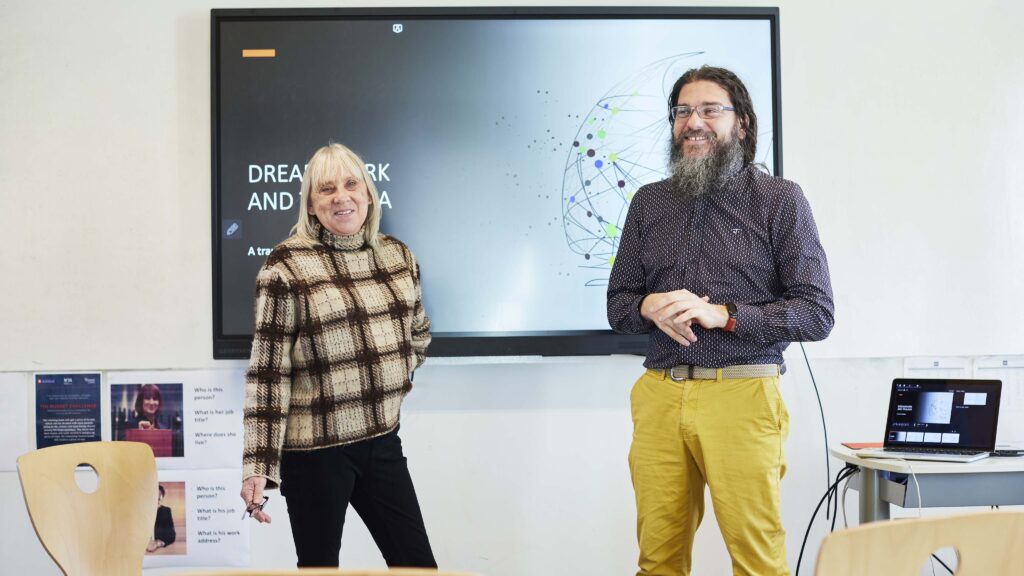
A strong TA101 course is not a passive lecture. It is structured, interactive, and designed to help you integrate learning into real life. Expect a blend of teaching, discussion, experiential exercises, and reflection.

1) You are taught a clear framework
Transactional Analysis is known for being accessible without being shallow. You will learn concepts that help you understand communication, conflict, repeating patterns, and the architecture of relationship. Many people find the experience strangely relieving, because what felt confusing becomes nameable, and therefore workable.
2) You reflect on lived examples
TA is most useful when it meets the texture of real life. You will be invited to bring examples from your work, relationships, and everyday interactions. The aim is not exposure, and it is not performance. It is learning to think with the model, and to notice what alternatives become possible when you can see a pattern more clearly.
3) You practise applying the ideas
A TA101 course usually includes simple practice-based learning, such as noticing transactions, identifying shifts in ego state, and mapping a repeating interaction. You learn to observe what is happening between people, rather than simply reacting inside it. This is one of the quiet gifts of TA: it creates a little space in which choice can return.
What you will learn on a Transactional Analysis 101 course
The syllabus is standardised, but different trainers will emphasise different examples. The core territory typically includes the following concepts, each taught in a way that beginners can grasp, and professionals can continue to deepen.
Ego states
You will learn the TA model of ego states, which offers a practical way to understand how different aspects of self organise thinking, feeling, and behaviour. This becomes immediately useful in everyday communication, because you begin to see not only what is being said, but from where it is being said.
Transactions and communication patterns
You will learn how TA understands transactions: the observable units of communication. This helps explain why some conversations flow, why others escalate, and why certain interactions reliably end in the same emotional place. You begin to notice patterns you have been living inside, and to recognise where a different response could shift the whole sequence.
Strokes and recognition
Strokes in TA refer to recognition, attention, and the ways we seek, give, refuse, or distort affirmation. This topic is often surprisingly moving. People begin to see how the hunger to be seen shapes conflict, compliance, perfectionism, withdrawal, and the quiet bargaining we do for belonging.
Life script and early decisions
TA introduces life script as a way of understanding how early decisions and adaptations can shape adult life, often outside awareness. This is one of the places where Depth TA becomes especially resonant. Script is not treated as a simple story you “change your mind” about. It is understood as something lived through relationship, emotion, body, and repetition, and therefore something that often changes through relationship, emotion, body, and new experience.
Psychological games
TA’s model of psychological games can be transformative. It names the repetitive relational sequences that lead to familiar emotional outcomes, even when those outcomes are painful. Games are not taught as moral judgement. They are taught as patterns that once served a purpose, and may now be costing too much.
Rackets and familiar emotional habits
Rackets describe familiar emotional patterns that can keep a person inside a predictable inner world. Learning this concept often brings both clarity, and compassion. It helps explain why certain feelings feel inevitable, why they arrive quickly, and why they can sometimes obscure other, more vulnerable emotions underneath.
Taken together, these concepts form an early toolkit for psychological literacy: the ability to notice what is happening, and to make different choices with more awareness.
What is distinctive about TA101 at The Metis Institute
We teach the TA101 course with a Depth Psychology focus, so the learning does not remain at the level of skills and concepts, but opens into a wider map of the psyche. TA offers a clear language for ego states, communication patterns, and life script. Alongside this, we introduce a depth perspective shaped by Freud’s attention to the unconscious and Jung’s sense that the psyche is larger than the personal story—an inner landscape in which inherited patterns, images, and meaning can be at work.

We also bring in Physis—the TA understanding of an innate life force oriented towards growth and healing—and place it in dialogue with individuation, the gradual process by which a person becomes more fully themselves. In this view, change is not merely correction, but an unfolding: the recovery of agency, vitality, and inner coherence.
The course is taught in a relational, experiential style, with space for reflection and integration. Lunch is included on both days, supporting a steady rhythm, informal conversation, and cohort connection as the learning settles.
Who a TA101 course is for
A TA101 course can be a strong fit if you are:
- A career-changer exploring psychotherapy training, and wanting a clear, credible first step.
- An early-career helper (education, healthcare, pastoral work, community roles, coaching) wanting a robust model for relational work.
- Someone who wants to understand communication patterns, conflict, and repeating dynamics, in a way that is practical, and psychologically deep.
- A practitioner who wants a shared language that supports supervision, reflection, and professional development.
It is less suitable if you want psychotherapy to be purely manualised, or if you do not accept that unconscious process shapes human behaviour, relationship, and change.
How TA101 supports career-changers
Many TA101 participants are not “already therapists”. They are people who have done something else well, often for years, and have reached a point where competence is no longer enough. Meaning begins to matter more. So does alignment.
TA101 can help career-changers in three concrete ways:
- It clarifies whether the work fits you.
Not as a fantasy, but as a lived experience of learning, reflection, group process, and psychological material. - It gives you a real vocabulary.
If you are considering psychotherapy training, language matters. TA gives you a way to speak precisely about relational dynamics without hiding behind jargon. - It makes the next step intelligible.
People often avoid training because it feels like an opaque world. TA101 makes the pathway clearer, and the requirements more visible.
If you are unsure whether to begin with TA101 or meet us first, place a link here to the Landing page, where you can choose between Open Day and TA101.
What you receive at the end of TA101
On completion of the course, you receive an internationally recognised TA101 certificate. For many people, it is a valuable standalone qualification. For those who want to progress, it is also the prerequisite for further formal training in Transactional Analysis.
How to book, and what to do if you are deciding
If you already know you want to start, the simplest next step is to join a TA101.
If you want to see upcoming dates first, place a link here to the Calendar page.
If you have questions about fit, readiness, or your next step, place a link here to Contact.
And if you want a brief orientation to who we are, and how we teach, place a link here to About Us.
Join TA101
A TA101 course is often the moment a new direction becomes practical. If you are ready, join TA101, and take the first step into Transactional Analysis training with a Depth Psychology focus.
FAQs
Is a TA101 course suitable for complete beginners?
Yes. TA101 is designed as an introduction, and it is taught to be accessible. You do not need prior therapy training to benefit.
Is TA101 internationally recognised?
TA101 is widely recognised as the standard introductory course in Transactional Analysis and is taught from a standardised syllabus. In many training contexts, it is the prerequisite for further TA training.
Do I need to be academic to take TA101?
You need curiosity, commitment, and willingness to reflect. The ideas are clear, and the learning is supported through discussion, examples, and experiential exercises.
What is different about your TA101 course?
We teach the TA101 course with a Depth Psychology focus, attending to what is symbolic, unspoken, and enacted in relationship, while keeping the core TA concepts clear, practical, and applicable.
Should I book an Open Day or join TA101?
If you want to meet us, ask questions, and sense fit, book an Open Day. If you feel ready to begin training now, join TA101.
What happens after TA101 if I want to continue?
TA101 is the first step. From there, you can explore progression into the Depth Transactional Analysis Theory Certificate, and onward into psychotherapy training within the wider pathway.