
By Sabine Tendas, Embodiment Tutor at The Metis Institute
What place does the body in psychotherapy training have alongside theory, conversation and reflection? During the first training weekend at The Metis Institute, students explored this question through movement, bringing Transactional Analysis (TA), Dance Movement Therapy and Jungian psychology into dialogue.
Across both groups, movement offered a way of listening to experiences that are not always immediately accessible through words: bodily sensations, memories, emotional responses and ways of relating to others.
Listening to the body in psychotherapy training
The journey began with an invitation to arrive in the body and notice, without trying to change anything. Students brought attention to weight, breathing, tension, lightness and the contact of their feet with the floor.
This simple practice opened an important question: how often do we pause to notice what is happening within us before trying to adjust, control or change it?
For a future psychotherapist, this pause has particular significance. In a therapy session, we might notice ourselves holding our breath or wanting to move away. Becoming curious about our own responses offers a starting point for exploring what is happening between ourselves and another person.
Learning to include the body in psychotherapy training can begin with small movements. A gesture, a shift in weight or a moment of stillness may offer something to reflect on. The invitation is to explore what is already happening and allow our curiosity to follow.
Finding a pace of our own
As students explored walking, stopping and starting again, they first resumed walking with a sense of urgency. In a second exploration, they chose when and how to move again, as if they had all the time in the world.
Experiencing these different approaches offered an opportunity to notice how the body responds to urgency, choice and the freedom to decide one’s own pace.
How quickly do we respond to an expectation? What happens when there is time to wait for our own impulse?
Exploring the body in psychotherapy training gives familiar ideas such as choice and adaptation a felt dimension. We can begin to recognise how readily we hurry, hesitate or wait for permission.
Bound and free: discovering movement possibilities
Students explored bound and free flow through images of everyday actions, first throughout their bodies and then in their walking. Some movement qualities felt familiar, comfortable or enjoyable; others were more challenging.
What happens when we allow ourselves greater freedom of movement? And what might we discover in a quality that feels less natural?
These questions leave room for different answers. A controlled movement may feel reassuring to one person and restrictive to another. The interest lies in noticing our own experience and having the possibility to explore something different.

When freedom brings unexpected feelings
One particularly meaningful moment emerged through the exploration of the Free Child and Adapted Child ego states in TA.
The invitation to reconnect with the Free Child did not necessarily bring lightness or carefree feelings. For some students, it opened memories of childhood expectations: having to be intelligent, prepared and academically successful, rather than simply being children.
Unexpectedly, the image of the free child brought feelings of anger.
This was a powerful reminder that reconnecting with spontaneity can also bring us into contact with what may have been missing, restricted or discouraged in our earlier experiences.
Here, the body in psychotherapy training opened a personal enquiry into freedom, adaptation and the feelings accompanying them. Within a Jungian perspective, there is also an invitation to become curious about what lies outside our familiar conscious identity. An apparently simple exploration can introduce us to something unexpected within ourselves.
Moving together without losing ourselves
The fourth-year group explored the relationship between individual identity and group belonging. Through rhythm, synchronisation and collective movement, students experienced the pleasure of moving together and becoming attuned to one another.
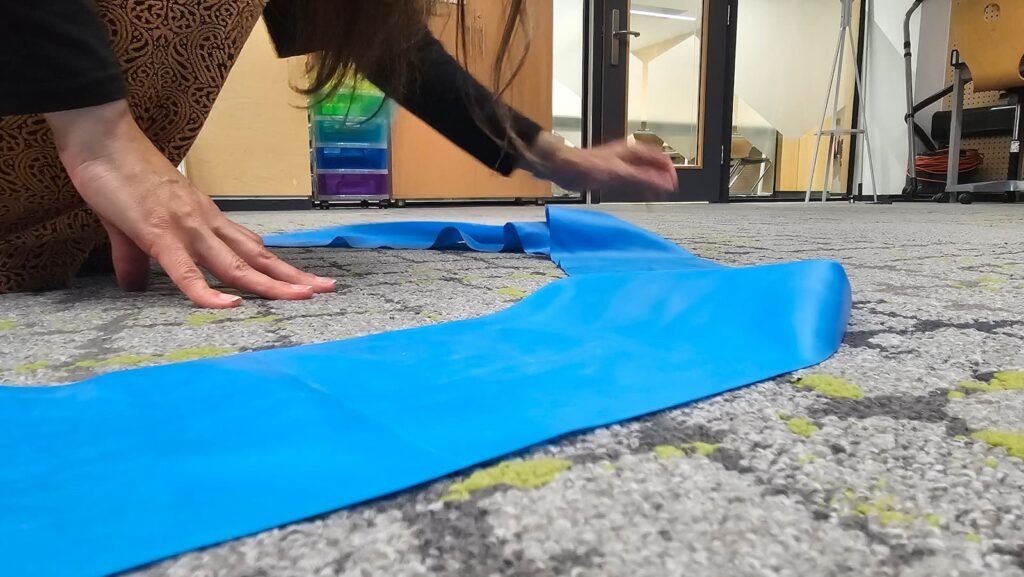
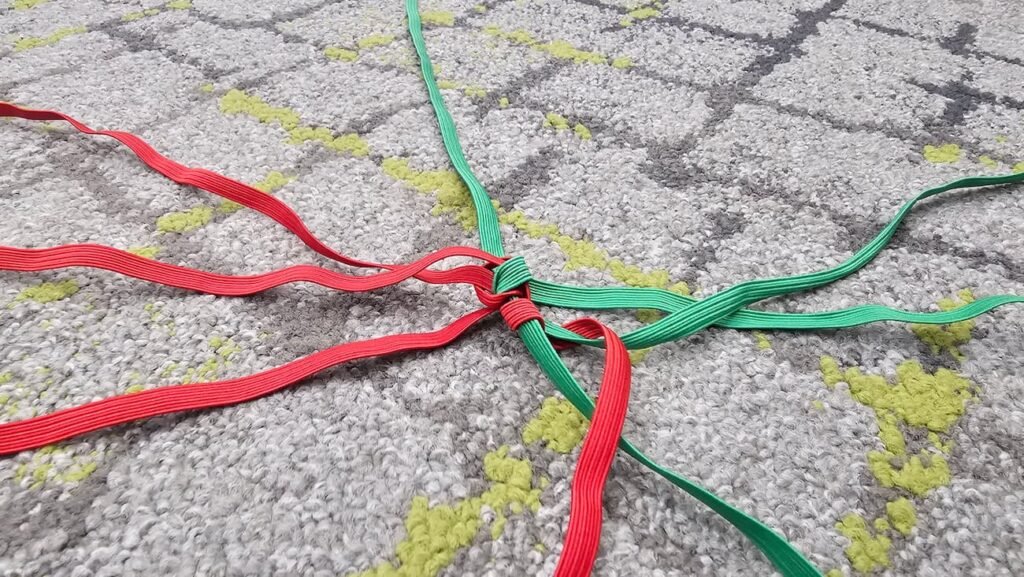
Working with elastic bands, they explored the tension between maintaining connection with the group and following an individual impulse, even when it meant moving in a different direction.
How do we remain connected to others without losing our own direction? How much of ourselves do we adapt in order to belong?
These questions also belong in the therapy room. Being available to another person involves noticing both their experience and our own. Connection asks us to remain present to difference as well as to what we share.
Boundaries and the space between us
Exploring the personal kinesphere, the space within reach of the body, brought attention to how each person inhabits their surroundings. Working with interpersonal distance then brought these questions into the space between two bodies.
As one student approached another, the experience highlighted how differently we perceive proximity and boundaries. What feels like an invitation to connect for one person may feel like an intrusion to another.
Attention to the body in psychotherapy training encourages us to ask about these differences. A gesture or a movement has no single meaning that we can assume in advance.
An embodied approach also asks us to respect consent, different physical capacities and each person’s pace. Pausing, observing or adapting a movement can be meaningful forms of participation.
Moving from classroom exploration into clinical work also means distinguishing our own experience from the client’s. We might notice an urge to hurry without assuming that the other person feels the same. Such impressions offer material for reflection and supervision.
Growing into an embodied therapist
By the end of the sessions, several students described feeling more open and available. Their movements also appeared wider, their shoulders more open and their faces more engaged with the surrounding space. These observations invited curiosity about how each person experienced the change.
At The Metis Institute, embodied learning is an important part of our Depth TA approach. It helps shape the therapists our students are becoming: attentive to words, bodily experience and the relationship unfolding between people.
We teach movement and body awareness within our wider psychotherapy programme. This does not provide a qualification or accreditation in body psychotherapy or dance movement psychotherapy.
For anyone drawn to the body in psychotherapy training, there is an invitation here: to experience psychological concepts, question them and discover how they take shape in our bodies and relationships.
To find out more about learning in this way, explore our psychotherapy training pathway.
Further Reading
Sabine’s reflections on dance movement psychotherapy and body psychotherapy