

When you look for residential psychotherapy training, it is easy to focus on content: the syllabus, the theory, the qualification, the timetable. All of that matters. But from a depth perspective, place matters too.
Psychotherapy training does not happen in abstraction. It unfolds in rooms, across weekends, through shared meals, silences, transitions, tiredness, and return. The environment becomes part of the learning. In a residential setting, that becomes even more true. The place is not simply where the training happens. It becomes part of the container that makes the training possible.
At Worth School, the training pathway includes an in-person weekend structure with a residential option, so learning is held not only through teaching, but through repeated return to the same setting. That continuity matters psychologically as well as practically.
Why place matters in psychotherapy training
A good training does not only teach you ideas. It also stirs the psyche.
As theory is taught, as material is experienced, and as you begin to encounter another person’s soul with greater seriousness, parts of your own psychic life may begin to emerge. Some of these parts are thoughtful and hopeful. Others may be anxious, ashamed, competitive, dependent, idealising, frightened, or hungry for recognition. Training does not create these movements, but it often constellates them.
That is why the learning environment matters. It helps determine whether what is stirred can be held, thought about, and gradually integrated, or whether it simply becomes fragmented and overwhelming.
Winnicott’s deceptively simple line is useful here:
“There is no such thing as an infant” (Winnicott, 1960, p. 587)
He means that the infant never exists in isolation, but always in relation to an environment of care. Training is not infancy, of course, but the principle still illuminates something essential: psychological development does not happen in a vacuum. It needs an environment capable of receiving it.
A learning container, not just a venue
From a depth perspective, a training institute is not just a venue. It is a learning container.
A container is not the same as comfort. It does not remove challenge. Rather, it makes challenge more bearable and more thinkable. It allows uncertainty, projection, envy, identification, inspiration, and emotional disturbance to arise without everything collapsing into confusion. It gives form to intensity.
Jung offers a striking image for this when he writes:
“The symbol of the mandala has exactly this meaning of a holy place, a temenos, to protect the centre” (Jung, 1968, p. 200)
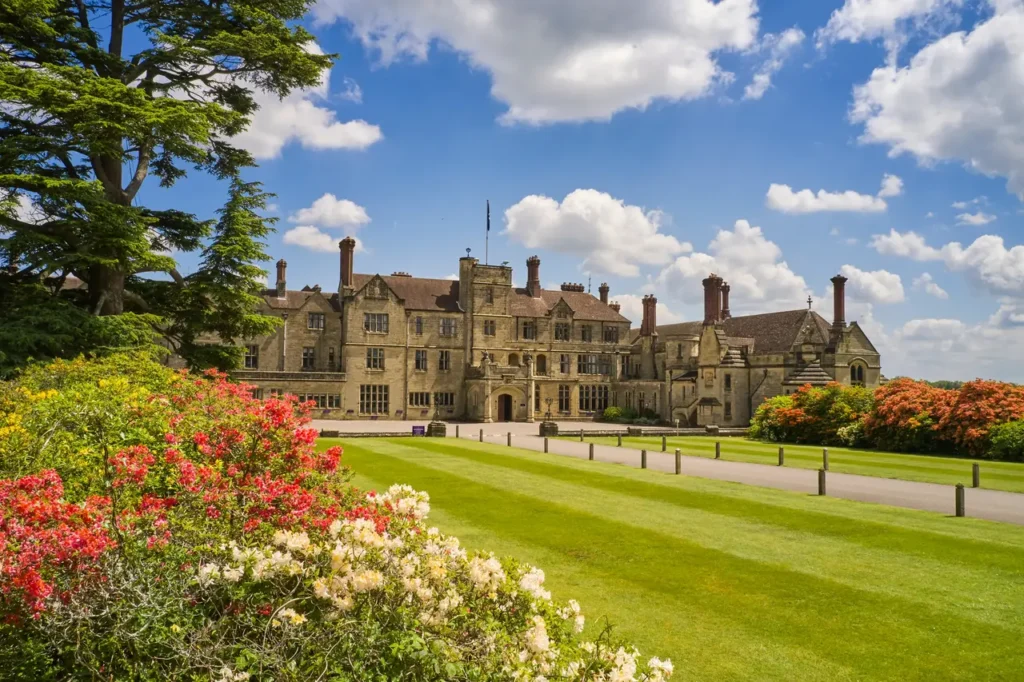
A serious training environment can function a little like that: not as a refuge from difficulty, but as a temenos, a bounded place in which psychic life can gather enough to be observed and worked with.
This is one of the deeper values of psychotherapy training weekends in a residential setting. You do not just arrive, absorb information, and leave. You remain. You sleep near the work. You walk after the work. You continue to carry what has been stirred. The psyche has time to reverberate.
Not a nursery, but something closer to an orphanage
If there is a symbolic image for this kind of training, it may be this: a depth-oriented institute is often less like a nursery and more like an orphanage.
Not in any literal sense, and not sentimentally. A nursery suggests innocence, beginning, and uncomplicated care. But psychotherapy training is rarely like that. By the time you arrive, much has already happened in your life. Something in you is unfinished, searching, displaced, or called. Training may awaken parts of the self that have long been exiled: the child who had to adapt too quickly, the one who never found a place, the sibling who disappeared into competence, pleasing, or silence.
A good institute does not try to raise these lost children from the beginning. But it can offer them somewhere to be for a while. It can provide a temporary home in which what has been excluded is not immediately banished again.
That is one of the quiet gifts of place. It can make the psyche feel that it does not have to defend itself quite so quickly.
Group process and lost siblings
The group is one of the main ways this happens.
Training is not therapy, and personal therapy remains the place where your psychic life is worked with most directly and intimately. But the training group does something different and indispensable. It constellates sibling dynamics: comparison, imitation, rivalry, admiration, exclusion, belonging, and the ache of not knowing where you stand.
Bion captures the atmosphere of serious group work when he writes that:
“The emotional situation is nearly always tense and confused” (Bion, 1961, p. 59)
That is exactly why the group matters. It is not meant to feel smooth all the time. It is meant to become a place where tension and confusion can be lived through without becoming merely destructive.
And yet the group can also be reparative. Sometimes it allows you to find what might be called lost siblings: aspects of yourself that become visible only through encounter with peers. One person’s courage may recall your own buried strength. Another’s uncertainty may release your shame. Another’s seriousness, feeling, or imagination may help you recognise something in yourself that had gone missing.
This is one reason the group is not incidental to training. It helps the psyche reformulate itself.

That process connects closely with What is Therapeutic Presence? A Depth TA View of Relational Work, because your ability to be present to clients grows partly from how well your own experience has been met, held, and thought about in relation.
It also unfolds alongside the same early pressure patterns described in Drivers in Transactional Analysis. A residential training can stir the need to be perfect, to try harder, to please, to hurry, or to appear strong. In a good container, these patterns do not simply run the show unnoticed. They become available for reflection.
And, because every group constellates roles, alliances, and tension, it can also activate the repetitive relational roles described in The Drama Triangle in Transactional Analysis. The value of the residential setting is not that it removes these dynamics, but that it gives them enough continuity and containment to become thinkable.
Why weekends matter
Repeated weekends matter because they create rhythm.
Psychological learning is rarely linear. It is recursive. You hear something, resist it, dream it, forget it, meet it again, and find that it has changed shape. A residential weekend structure respects that rhythm. It allows opening, withdrawal, return, and integration. What feels merely theoretical one month may arrive as lived recognition the next.
This is also why training needs supervision and therapy alongside it. Training opens many threads, but it does not tie them all together by itself. That deeper gathering belongs partly to personal therapy, and partly to the reflective function of supervision, as explored in Supervision in Psychotherapy Training: What It Is, and Why It Matters.

Place, then, is part of the teaching
Ultimately, place matters because psychotherapy training is not only about what you learn. It is also about who you are becoming in the learning.
A residential setting can support that becoming by offering continuity, atmosphere, group process, symbolic density, and enough containment for the psyche to show more of itself. It does not do the work for you. But it helps create the conditions in which the work can deepen.
If you are looking for psychotherapy training that values depth, rhythm, and the psychological importance of repeated in-person weekends, residential training may offer more than convenience. It may offer the kind of place in which learning becomes experience, and experience begins to take form.
To explore whether that path is right for you, Book an Open Evening, read more about the training pathway, and, if available, visit the location and residential option page.
Frequently Asked Questions
Place matters because psychotherapy training is not only intellectual. It stirs emotional, relational, and symbolic processes, and the environment helps determine whether these can be held and thought about.
Residential training offers continuity. Instead of leaving the learning environment immediately, you remain close to the work, which can deepen reflection, group process, and integration.
Weekend rhythms allow learning to unfold over time. They create space for repetition, return, and gradual development rather than one-off stimulation.
Yes. Group life often activates comparison, belonging, envy, admiration, and role dynamics. When held well, these experiences contribute to professional and personal development.
No. Training may awaken many psychic threads, but personal therapy remains the place where these are worked with most directly and personally.
References
Bion, W. R. (1961). Experiences in groups and other papers. Tavistock.
Jung, C. G. (1968). Analytical psychology: Its theory and practice (The Tavistock lectures). Vintage Books.
Winnicott, D. W. (1960). The theory of the parent-infant relationship. International Journal of Psycho-Analysis, 41, 585–595.